
WELCOME BONUS 300%
UP TO €2000 + 100
FREE SPINS
UP TO €2000 + 100
FREE SPINS
Home → Blackjack
Blackjack at Vinn Casino: Variants, Rules and Payouts
What a Natural Blackjack Actually Pays
A natural blackjack pays 3:2 on the six-deck game, so a €100 stake returns €150 and a €10 stake returns €15. That 3:2 payout is the standard against which every other rule is measured, and the six-deck, S17, DAS, DOA game reaches an RTP of 99.54% with a house edge of 0.46% only when basic strategy is followed. For the reader this means the gap between a well-played hand and a careless one is the difference between losing 46 cents and losing considerably more per €100 staked.
Replacing the 3:2 payout with 6:5 adds exactly 1.39 percentage points to the casino's edge, the largest single rule change in the game, and drops RTP from 99.54% to 98.15%. On the same €10 bet a blackjack then pays €12 instead of €15, a shortfall of €3 on every natural. Insurance, by contrast, pays 2:1 but carries an RTP of 92.53% and a house edge of 7.47% across six to eight decks, which is why basic strategy always declines it.
Fewer decks work in the player's favour: the single-deck, classic-rules game at 3:2 reaches an RTP of 99.85% and a house edge of 0.15%, roughly 0.48 percentage points better than an eight-deck shoe. The six-deck game sits between those poles at 99.54%, while the Liberal Vegas Strip rule set at 99.72% shows how much the surrounding rules matter. A player comparing two tables therefore gains more from the payout ratio and the deck count than from any single decision at the felt.
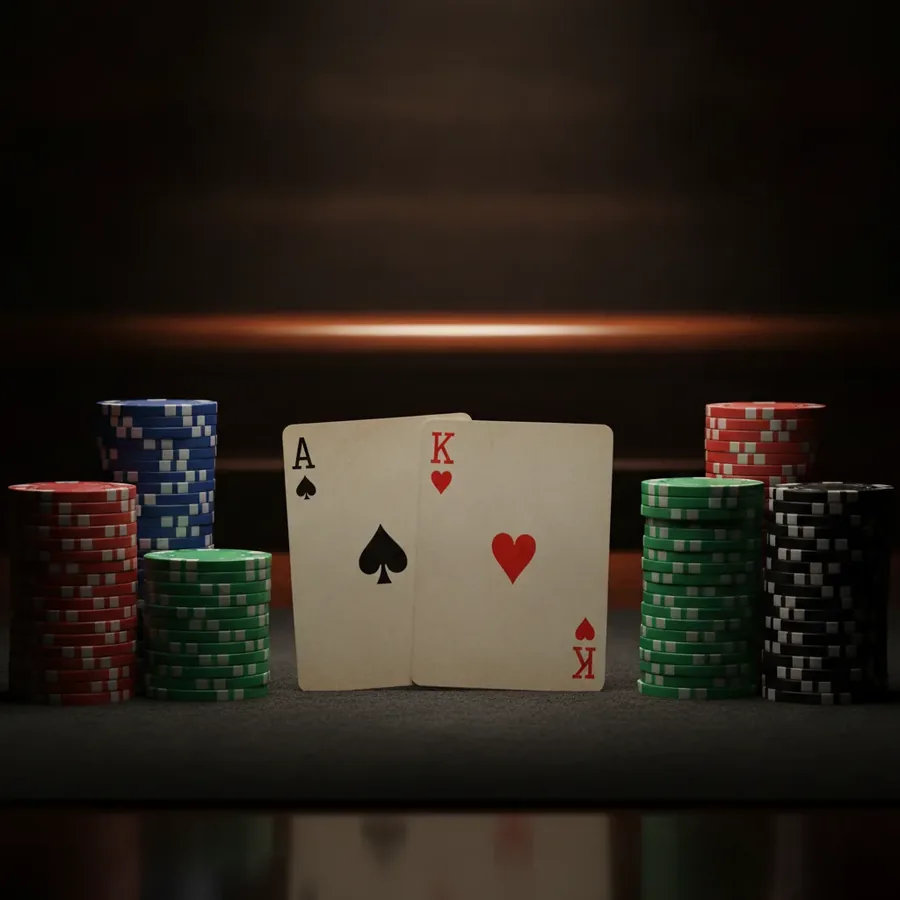
Insurance vs Even Money When You Hold Blackjack
Insurance is a separate side bet of up to 50% of the main bet, offered when the dealer shows an ace, and it pays 2:1. Across six to eight decks it returns an RTP of 92.53% with a house edge of 7.47%, while the single-deck version improves to roughly 5.88%. Basic strategy therefore always declines insurance, the only exception being card counters at a true count of at least +3.
The arithmetic on a €100 main bet makes the gap concrete: a €50 insurance stake returns €150 when the dealer holds a ten-value card, but the 92.53% RTP means €100 of such stakes costs about €7.47 on average over the long run. That is more than the 0.46% house edge of the underlying six-deck game, so the side bet is a far worse proposition than the hand it accompanies. Staking the maximum 50% doubles the exposure without improving the odds.
Even money on the player's own blackjack is the same wager in a different wrapper, and the 2:1 payout on insurance is what makes it unattractive relative to the guaranteed 3:2 on the natural. A player holding blackjack who takes even money forgoes the €150 return on a €100 stake in exchange for a flat €100, which is the €50 difference the insurance RTP already prices in. The single-deck variant at approximately 5.88% is less punishing but still leaves the house ahead.
Which Rule Variants the Software Shows
Live blackjack at the table comes in three named forms: Quantum Blackjack Plus Live from Playtech with bets from €1 to €5,000, Lightning Blackjack from Evolution with bets from €1 to €2,500, and Blackjack Party, also from Evolution, with bets from €1.00 to €1,000. Each carries its own RTP, with Quantum Blackjack Plus Live at 99.57% under optimal strategy and Lightning Blackjack at 99.56%. The 0.01 percentage point gap between the two is negligible, so the practical choice rests on the bet range and the multiplier mechanics.
A player at the €1 minimum on either table is therefore chasing a very different distribution of outcomes for a similar 99.5%-plus return.
Blackjack Party from Evolution runs a bet range of €1.00 to €1,000 and is built around two hosts rather than multipliers. Its wider low-end range suits smaller stakes than the €1 minimum shared by the other two, though the €1,000 ceiling is below both the €2,500 of Lightning Blackjack and the €5,000 of Quantum Blackjack Plus Live. Players weighing mobile play should note that all three are live-dealt tables with the same basic 3:2 blackjack settlement, so the variant choice does not change the underlying payout structure.
Split, Double Down and Surrender by the Numbers
The six-deck game allows double down on any first two cards and doubling after a split, and those two permissions are worth about 0.14 percentage points of house edge in the player's favour. Doubling after a split, known as DAS, improves the return by roughly 0.14 percentage points, while resplitting aces adds another 0.08 percentage points. Both are already baked into the 99.54% RTP figure, so a table without them is measurably worse than the headline number suggests.
Late surrender is a rule modifier rather than a game in its own right: the player gives up the hand after the dealer has checked for blackjack and loses half the stake, or 50% of the money committed. That single option is worth minus 0.08 percentage points of house edge, improving RTP by about the same amount. Early surrender is worth far more, up to minus 0.6 percentage points, but it is extremely rare at the tables.
A split can extend to as many as four hands, and split aces usually receive only one card each, which limits how far the aces can be developed. Dealer hits on soft 17, or H17, works the other way and adds 0.22 percentage points to the house edge, more than offsetting the 0.14 percentage points won back by DAS. Moving from eight decks to six is worth about 0.02 percentage points, so deck count and the soft-17 rule together decide whether a table sits above or below the 99.54% benchmark.
Stand-on-17 Rule and Its Meaning for Players
The dealer standing on soft 17 is the assumption behind the 99.54% RTP and 0.46% house edge of the six-deck, S17, DAS, DOA game. Reversing that rule so the dealer hits soft 17 adds 0.22 percentage points to the casino's edge, which is larger than the 0.14 percentage points gained from doubling after a split. Two tables can therefore share the same 3:2 payout and the same six decks yet differ by more than a fifth of a percentage point in the player's favour.
The Liberal Vegas Strip rule set combines S17 with DAS, resplitting and late surrender to reach an RTP of 99.72% and a house edge of 0.28%, which is 0.18 percentage points better than the plain six-deck S17 game. Its standard deviation of 1.15 describes the spread of outcomes around that average, not the average itself. The single-deck classic game at 99.85% and 0.15% shows the upper bound of what rule combinations can achieve.
For mobile players the soft-17 rule is invisible at the table but decisive over hundreds of rounds: on €100 of stakes the H17 version costs about 22 cents more than the S17 version per full cycle of play, and the 6:5 payout would add 1.39 percentage points on top of that. Checking the rule set before sitting down is therefore worth more than any in-hand decision, because the player cannot change the dealer's soft-17 behaviour once the cards are dealt.
Blackjack variants at a glance
| Variant | Payout | House edge | Rule | RTP |
|---|---|---|---|---|
| Blackjack Liberal Vegas Strip (liberal rules, 3:2) | Blackjack 3:2, win 1:1 | 0.28% | The most player-friendly rule set: S17 + DAS + resplit + late surrender. Standard deviation 1.15 | 99.72% |
| Blackjack Surrender (late surrender) – rule effect | 50% of the stake returned | −0.08 percentage points | The player gives up the hand after the dealer has checked for blackjack and loses half the stake. Improves RTP by about 0.08 percentage points. Early surrender is worth much more (up to −0.6 percentage points) but is extremely rare. | n/a (rule modifier) |
| Blackjack Insurance (6–8 decks) | Insurance 2:1 | 7.47% | Separate side bet of up to 50% of the main bet when the dealer shows an ace. Basic strategy ALWAYS declines it (except for card counters at a true count ≥ +3). With a single deck the edge is ≈ 5.88% | 92.53% |
| Blackjack 6:5 payout instead of 3:2 (6 decks) | Blackjack 6:5, win 1:1 | 1.85% | Replacing 3:2 with 6:5 adds exactly +1.39 percentage points to the casino's edge – more than any other rule change. On a €10 bet a blackjack pays €12 instead of €15. | 98.15% |
| Blackjack Single deck, classic rules, 3:2 | Blackjack 3:2, win 1:1 | 0.15% | Fewer decks = lower edge; one deck gives about −0.48 percentage points compared with 8 decks. Often offset by a 6:5 payout. | 99.85% |
| Blackjack 6 decks, S17, DAS, DOA, 3:2 payout, basic strategy | Blackjack 3:2, regular win 1:1, insurance 2:1 | 0.46% | Dealer stands on soft 17; double down on any first two cards; doubling after a split allowed; no surrender. Basic strategy is required to reach this figure | 99.54% |
One Deck vs Eight Decks: The House Edge Gap
Blackjack Single deck, classic rules, 3:2 reaches an RTP of 99.85% with a house edge of 0.15%, the lowest edge of any variant on this page. House edge is the average share of each stake the casino keeps, so 100 € of stakes costs about 0.15 € on average across many rounds.
A single deck gives about −0.48 percentage points compared with eight decks, which is why the house edge of 0.15% sits so far below the 0.46% of Blackjack 6 decks, S17, DAS, DOA, 3:2 payout. Fewer decks leave fewer ten-value cards in play, and that shifts the edge in the player's favour.
That advantage is often cancelled, because single-deck tables frequently pay 6:5 instead of 3:2. Blackjack 6:5 payout instead of 3:2 (6 decks) shows what that switch costs: RTP drops to 98.15% and the house edge rises to 1.85%, so a 10 € bet returns 12 € on a blackjack instead of 15 €.
The 3:2 Blackjack Payout Explained
A 3:2 blackjack payout pays 150 € on a 100 € stake, while a 6:5 payout pays only 120 €, a difference of 30 € on the same hand. Replacing 3:2 with 6:5 adds exactly +1.39 percentage points to the casino's edge, more than any other single rule change in the game.
Blackjack Liberal Vegas Strip carries 3:2 and a house edge of 0.28%, and Blackjack Single deck, classic rules, 3:2 sits at 0.15%. Both figures depend on the payout, because a 1:1 win on an ordinary hand pays the same at every table; only the blackjack bonus changes with the ratio.
At 100 rounds of 10 € each, a 3:2 table returns 15 € on each blackjack and a 6:5 table returns 12 €, so the gap reaches 300 € across 100 such hands. Blackjack 6 decks, S17, DAS, DOA, 3:2 payout keeps the full 3:2 ratio and a house edge of 0.46% with basic strategy.
When Can You Raise Your Bet?
Doubling down is allowed on any first two cards at Blackjack 6 decks, S17, DAS, DOA, 3:2 payout, and it doubles the stake to 2x in return for exactly one additional card. Doubling after a split is a separate permission and improves the return by about 0.14 percentage points.
Splitting runs to a maximum of four hands, and split aces usually receive one card each, which limits how far the stake can grow on those hands. Resplitting aces improves RTP by 0.08 percentage points, a smaller gain than the 0.14 from doubling after a split.
Late surrender is the other route to a controlled exit: the player gives up the hand after the dealer has checked for blackjack and loses half the stake, improving RTP by about 0.08 percentage points. On a 10 € hand, surrender returns 5 €, while doubling commits 20 € to a single card.
Side Bets Raise the House Edge to 5%
Insurance is a side bet of up to 50% of the main bet, placed when the dealer shows an ace, and it pays 2:1. With six to eight decks its RTP is 92.53% and its house edge is 7.47%, so it returns less than the main hand at 99.54% under Blackjack 6 decks, S17, DAS, DOA, 3:2 payout.
Basic strategy always declines insurance, with the single exception of card counters at a true count of +3 or higher. With a single deck the edge is about 5.88%, lower than the 7.47% of the six-to-eight-deck game but still far above the main bet's 0.46%.
At 100 € of insurance stakes, 7.47% costs about 7.47 € on average, while the same 100 € on Blackjack Liberal Vegas Strip at a 0.28% house edge costs about 0.28 €. Insurance covers only the dealer's ace, so it does nothing for the other 48 cards in a single deck.
Surrender or Play On With 16 Against a 10
Late surrender is a rule modifier that returns 50% of the stake and lowers the house edge by 0.08 percentage points. On a 16 against a dealer 10, the player gives up the hand after the dealer has checked for blackjack and loses only half the stake. Playing out the same hand under the 6-deck S17 rules carries a house edge of 0.46% before the modifier, so surrender changes the expected cost of the decision directly.
The 6-deck Blackjack game with S17, DAS and DOA shows an RTP of 99.54%, while the Liberal Vegas Strip variant with late surrender reaches 99.72%. That is a difference of 0.18 percentage points in favour of the player when surrender is available. On a €100 stake, the liberal rules keep €0.28 on average against €0.46 in the standard 6-deck game without surrender.
Blackjack Party from Evolution and Lightning Blackjack both sit close to the non-surrender figure, with RTP values of 99.56% and 99.56%. A 16 vs 10 played out in those games therefore costs more in the long run than the same hand surrendered under liberal rules. The late surrender modifier is small, but on repeated decisions it shifts the expected loss for the player measurably.
What the Hole Card Means at a Live Table
The hole card is the dealer's face-down card at a live table, and its presence changes when the player may act. In Quantum Blackjack Plus Live from Playtech, the dealer checks for blackjack before players continue, which is the standard procedure that makes late surrender possible. The RTP of that game is 99.57% with optimal strategy, so the check does not penalise the player.
Lightning Blackjack by Evolution runs with unlimited players and a bet range of 1 - 2,500 EUR. The hole card procedure there follows the same live-table logic: the dealer peeks when an ace or a ten is showing, and the hand continues only if no dealer blackjack exists. The RTP is 99.56%, almost identical to the Playtech figure.
Blackjack Party from Evolution uses a bet range of 1.00 - 1,000 EUR and two hosts. The hole card still governs the order of play, but the party atmosphere does not change the rule. If the dealer shows an ace, the insurance side bet appears before the hole card check, and basic strategy always declines it outside card counting at a true count of +3 or higher.
The Insurance Mistake: 7% Extra House Edge
Insurance carries a house edge of 7.47% with 6–8 decks, which is more than sixteen times the 0.46% edge of the standard 6-deck S17 game. The side bet allows up to 50% of the main bet and pays 2:1 when the dealer has blackjack. On a €100 main bet, a full €50 insurance stake loses €3.74 on average every time the offer is accepted.
The RTP of insurance is 92.53%, compared with 99.54% for the main game and 99.72% for Liberal Vegas Strip rules. That is a gap of more than 7 percentage points in return. A player who takes insurance on every dealer ace converts a nearly break-even game into one where the casino keeps a much larger share of each stake.
The single-deck version reduces the insurance edge to roughly 5.88%, but that is still far above the 0.15% edge of classic single-deck blackjack with a 3:2 payout. Card counting at a true count of +3 or higher is the only mathematical exception. For a player using basic strategy, insurance is an error that adds 7.47% to the house edge on the side bet.
Split Aces: Only One Card per Hand
Splitting aces under the standard rule gives each ace only one additional card, and split aces cannot be resplit. The rule modifier for resplitting aces improves RTP by 0.08 percentage points, while doubling after a split improves it by about 0.14 percentage points. A player with a pair of aces in the 6-deck S17 game therefore faces a fixed one-card draw on each hand.
The house edge of the 6-deck S17 game is 0.46%, with doubling after a split allowed and no surrender. Resplitting aces is not part of that rule set, so the player cannot split aces again even if another ace arrives. On a €100 stake, the lack of resplit aces costs about €0.08 per decision compared with a game that allows it.
The Liberal Vegas Strip variant reaches an RTP of 99.72% with S17, DAS, resplit and late surrender, and that rule set allows the resplit of aces. The single-deck classic game shows an RTP of 99.85%, but many single-deck tables offset the low deck edge with a 6:5 payout. The one-card rule on split aces remains a standard restriction across most live tables.
Contact
Live - online chat
Banking









Providers












Vinn Casino 2026